 English
 Español
 Français
 Português
How to Fix Glue Splattering on Automatic High-Speed Folder Gluer
The machine is running at full speed. Carton blanks fly through the folding section. But instead of clean glue lines on the flaps, you see fine droplets scattered across the box surface—and worse, offset stains transferring to the next blank in the stack. Glue splatter on an automatic high-speed Folder Gluer doesn‘t just ruin product appearance; it creates customer complaints, increases cleanup time, and can even foul sensors. The frustration is that splatter often appears only after you’ve pushed the line to meet a tight deadline. This guide covers the three most common causes, how to spot each one by looking at the splatter pattern, and the adjustments that will stop it without replacing costly components.
Spotting splatter before it ruins your run
The appearance of splatter tells you as much about the cause as the fact that it‘s happening at all. Tiny dots scattered across the glue flap and surrounding surfaces typically point to low glue viscosity at high application speeds—the adhesive is simply too thin to stay in place. Streaks or tailing, where glue trails across the blank outside the intended application zone, usually come from a nozzle orifice damaged or misaligned with the glue wheel. Offset stains that appear on the back of the next blank—glue transferred from one sheet to another—indicate excessive air pressure in the glue system, which aerates the adhesive and creates droplets that escape the intended path. Ignoring splatter carries real costs: rejected cartons, machine downtime for cleaning, and potential sensor damage when glue reaches photoelectric eyes.
Too thin, too fast – why viscosity matters
At high speeds, glue behaves differently than it does during slow setup runs. When you increase machine speed, the adhesive experiences higher shear forces inside the nozzle and on the glue wheel. If the viscosity is too low for that speed, the glue shears into fine droplets rather than a clean bead. A low‑viscosity water‑based glue is often preferred for high‑speed corrugated cardboard folder gluers to ensure smooth application, but “low” is relative to speed. For example, a glue that works perfectly at 150 m/min may start splattering at 250 m/min simply because the application rate exceeds the adhesive‘s cohesive strength.
How speed affects glue behavior. At higher speeds, the time available for the glue to wet out the substrate decreases. Operators often increase glue flow to compensate—but that increases pressure at the nozzle exit, making splatter worse. Running 300 m/min requires a different adhesive formulation than 100 m/min.
Fix – adjust temperature or switch to a high‑speed formula. For hot melt adhesives, raising the temperature lowers viscosity. Increase the glue pot temperature in 5°C increments and test; stop when splatter stops or when you hit the manufacturer‘s maximum. For water‑based adhesives, consult your glue supplier for a high‑speed formulation with the same solids content. Do not simply dilute the glue with water—that lowers viscosity but also reduces bond strength.
A damaged nozzle makes a mess
The nozzle orifice directs glue onto the glue wheel or directly onto the carton flap. After months of operation, the sharp edge of the orifice wears down or develops tiny burrs. These imperfections catch glue and cause it to “tails” or spray as the wheel rotates past. Misalignment is equally problematic: if the nozzle is not centered on the glue wheel groove, glue will be pushed sideways and splatter.
Check nozzle condition with a magnifier. Stop the machine and remove the nozzle assembly. Look at the orifice under magnification—any nicks, rounding, or deformation indicates wear. Even a 0.1 mm flat spot can cause splatter. If the nozzle is worn, rotate it to a fresh position (if the design allows) or replace it.
Clean the nozzle properly. Use a dedicated nozzle cleaning needle or fine wire. Never use a metal drill bit or oversize pin—that enlarges the orifice and makes splatter worse. Flush the nozzle with warm water or solvent appropriate for the adhesive.
Adjust alignment with the glue wheel. The gap between the nozzle tip and the glue wheel should be about 0.1 mm—roughly the thickness of a standard business card. Use a feeler gauge to set the gap. If the nozzle touches the wheel, it will wear rapidly and create debris that clogs the orifice. Too far away, and glue will bounce off the wheel instead of transferring cleanly.
Air in the system? That’s a problem
Excessive air pressure or air entrapment in the glue supply turns a clean adhesive stream into a frothy, spray‑prone mess. Air can enter through a pressure regulator set too high (causing cavitation in the pump), through a loose intake fitting on the pump, or from agitation in an open glue tank.
Where air enters the system. On pressurized tank systems, check the air pressure regulator. Pressures above 3 bar can cause the glue to foam as it exits the nozzle. On pump systems, look for air bubbles in the supply hose. A pinhole leak on the intake side will pull air into the adhesive.
Fix – lowering pressure and bleeding air. Reduce tank pressure to 2–3 bar (30–45 psi) and test. If splatter diminishes, the pressure was too high. For pump systems, run the pump slowly with the nozzle removed until a solid, bubble‑free stream appears. Reinstall the nozzle and test at speed. If air bubbles persist, inspect intake fittings and replace any that are cracked or loose.
Extra checks when splatter won‘t stop
If you’ve addressed viscosity, nozzle condition, and air pressure but splatter remains, look at mechanical wear and timing. A glue roller with worn grooves—common after years of corrugated board dust abrasion—will pick up glue unevenly and fling it. Inspect the roller surface; if the grooves are shallow or irregular, replace the roller. Timing mismatch between glue application and the folding section can also cause glue to be applied while the flap is still moving erratically, shaking droplets loose. Check the registration between the glue system and the feeder; the glue wheel should contact the flap only during the intended glue window.
Keeping splatter away for good
Daily cleaning routine for nozzles and hoses. At the end of each shift, flush the glue system with warm water or cleaning solution. Remove the nozzle and soak it in cleaner overnight. This prevents dried glue buildup that changes the orifice geometry and causes splatter the next morning.
Weekly viscosity check log. Use a simple flow cup (e.g., Zahn cup #2) to measure viscosity. Record the reading each week. A sudden drop indicates water contamination or incorrect mixing. Stable viscosity means fewer surprises at high speed.
Questions operators ask about glue splatter
Q: Can I use cheaper glue to reduce splatter?
A: No. Cheaper glues often have inconsistent viscosity or filler content that increases splatter risk. Stick with the adhesive recommended for your machine and speed range. The cost of waste and rework from splatter far outweighs any savings on glue.
Q: Does splatter cause damage to the machine sensors?
A: Yes. Photoelectric eyes that detect box presence or flap position can become coated with fine glue mist. Clean sensors weekly with a soft cloth and isopropyl alcohol. Replace any sensor with glue hardened inside the lens housing.
Q: Why does splatter happen only at the start of a run?
A: Cold glue is thicker and less likely to splatter. As the machine runs, the glue warms up from friction and ambient heat, viscosity drops, and splatter begins. Pre‑warm the glue system before high‑speed runs, or use a glue formulation designed to maintain viscosity across a wider temperature range.
Q: Can line speed be reduced temporarily to avoid splatter?
A: Yes, but that costs throughput. Use reduced speed only as a temporary workaround while you fix the root cause. Once you correct viscosity, nozzle, or air pressure, full speed should run clean.
When to call for technical support
If you have gone through all three causes—viscosity, nozzle, air pressure—and splatter persists, the issue may be deeper: a worn glue pump, damaged glue wheel bearing, or electronics problem in the glue timing circuit. Document the glue type, machine speed, and what adjustments you have tried. Then contact the equipment manufacturer‘s support team. Gaoke’s after‑sales service can help diagnose remotely or dispatch a technician. Have your machine model and serial number ready.
Built for clean, high‑speed gluing
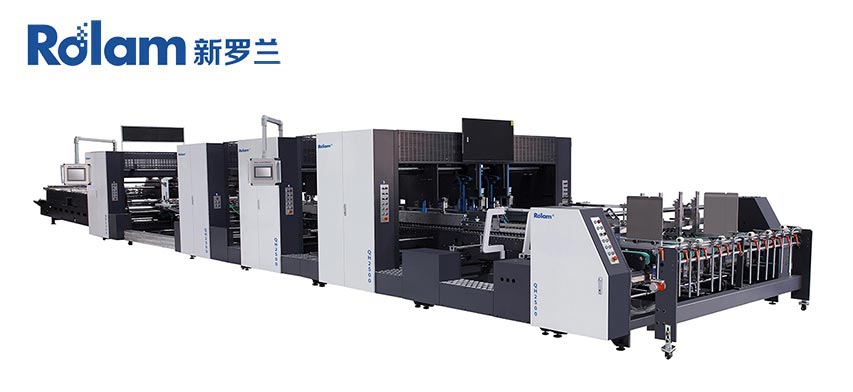
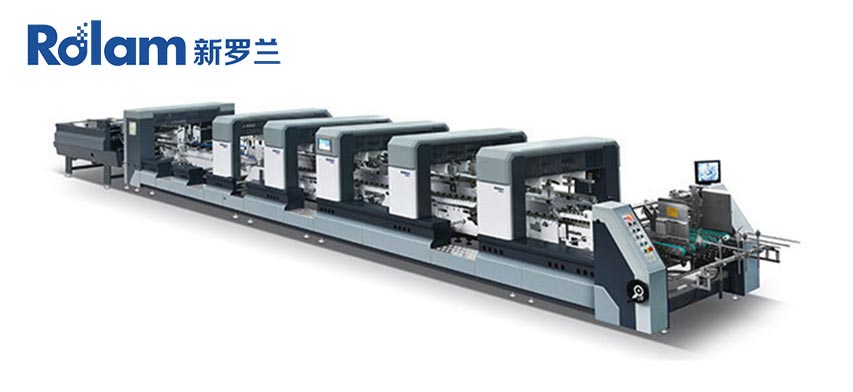
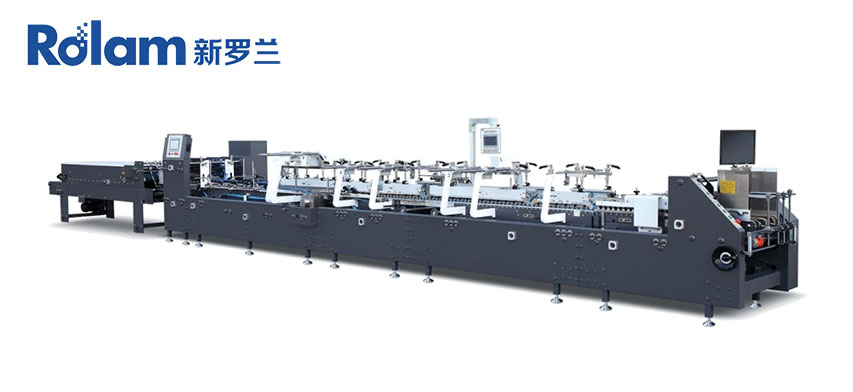
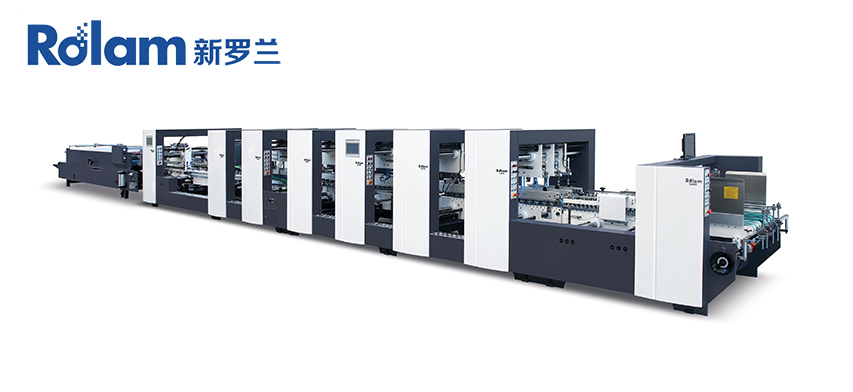
When you need a Folder Gluer that handles high speeds without splatter, the mechanical design matters as much as the adjustments. Gaoke (Rolam brand) manufactures the PCS Series Automatic Corrugated 4&6 Corner Folder Gluer, built with precision‑ground glue wheels, hardened stainless steel nozzles, and a closed‑loop pressure control system that maintains consistent viscosity. The PCS series is designed for corrugated board from E‑flute to heavy double‑wall, with speeds up to 300 m/min and programmable glue patterns for 4‑corner and 6‑corner boxes. The glue system includes an easy‑clean nozzle cartridge design, digital pressure readout, and viscosity logging capability. Operators on Gaoke machines report fewer splatter incidents and shorter cleanup times.
→ Request a quote from Gaoke for the PCS Series Automatic Corrugated 4&6 Corner Folder Gluer — Share your typical board type, production speed, and glue type. Their technical team can recommend nozzle configuration and provide a remote troubleshooting session.