 English
 Español
 Français
 Português
What Is a Folder Gluer and How Does It Improve Carton Production?
If you’re still folding and gluing cartons by hand, you already know the squeeze: inconsistent quality, aching wrists, and people leaving because the work is tedious. A Folder Gluer changes that. This machine takes flat, die-cut cardboard blanks and turns them into finished boxes — folded, glued, and ready for filling — in one continuous pass. No manual folding, no glue brushes, no waiting. In this article, we’ll walk through how it works, why it boosts throughput from dozens to hundreds of boxes per minute, and which type fits your operation. By the end, you will know whether this equipment belongs on your floor.
So What Actually Happens Inside?
The name tells you exactly what it does, but let’s look at the two jobs. Folding happens first. The machine uses a sequence of folding belts, guides, and rotating hooks to push each panel of the flat blank along pre-creased lines into its final shape. Gluing follows — cold glue or hot-melt adhesive is applied precisely to the flap that holds the box together.
The big difference between this machine and manual folding is repeatability. Every box emerges identical — same dimensions, same seam strength, same appearance. Manual folding cannot achieve that consistency shift after shift. One person might fold 20 boxes per minute with decent quality, but by hour three, fatigue sets in and the rejects pile up. A folder gluer doesn’t get tired.
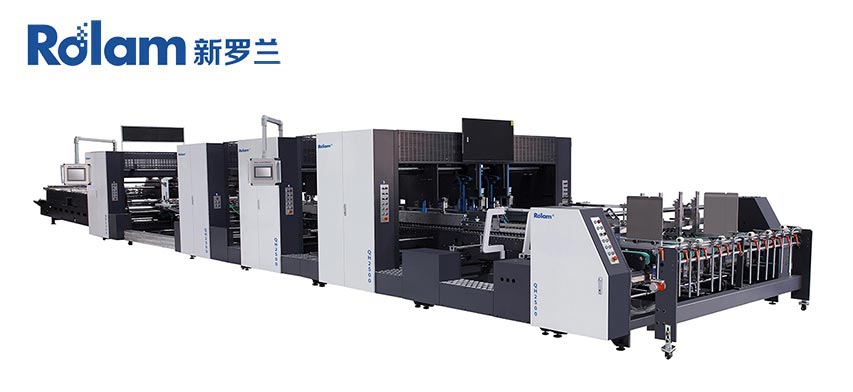
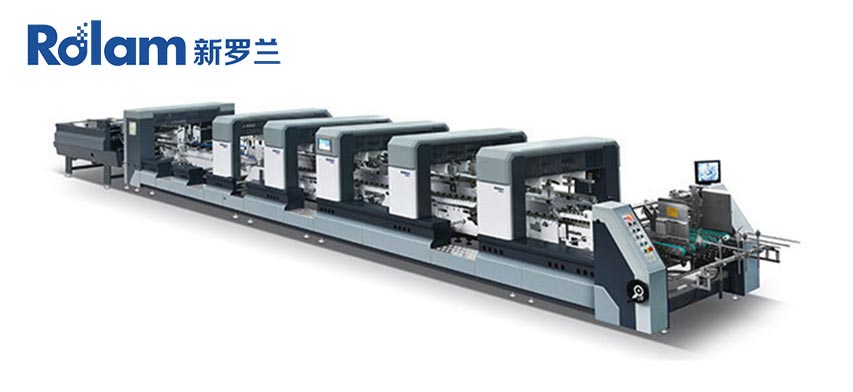
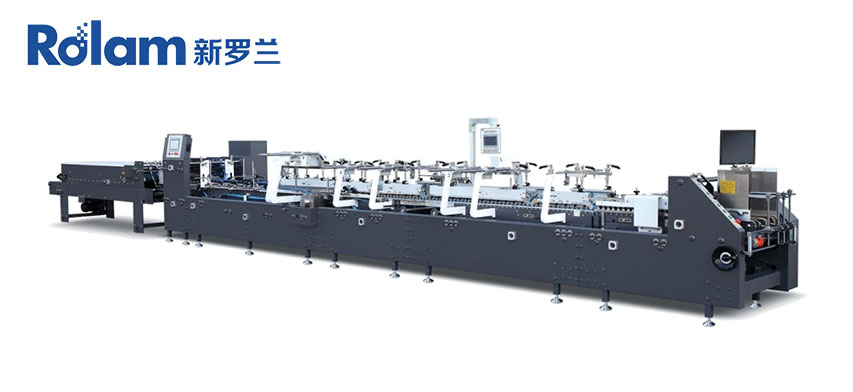
A Quick Tour of the Parts That Matter
-
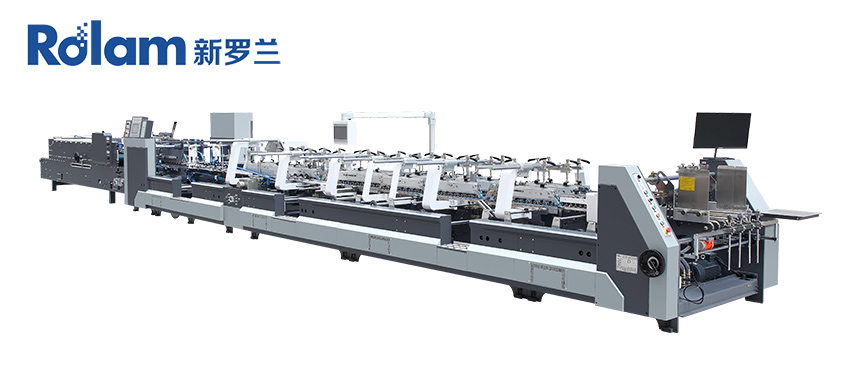
Feeder section. Stacked blanks are fed one by one. Modern feeders prevent double-feeding using vacuum belts or mechanical separation.
-
Pre-folding section. Breaks the crease lines so the board folds smoothly. Skip this and boxes resist folding or crack along the seams.
-
Glue system. Applies adhesive precisely. Wheel, spray, or nozzle — each has its place.
-
Folding section. Belts and rails guide each panel into position. Adjustable rails handle different box sizes without tools.
-
Pressing & counter section. Applies pressure to the glued seam, securing the bond before the box hits the stacker.
From 20 Boxes an Hour to 300 a Minute — Here’s the Math
Manual folding tops out at 10–20 boxes per minute on a good day. An automatic folder gluer typically runs 150–300 boxes per minute — some up to 400 meters per minute in linear speed. That’s not an incremental improvement; it’s a different league.
Then there’s glue waste. Manual gluing leads to over-application (glue squeeze-out) or under-application (weak seams). Automatic systems apply exactly the right amount in exactly the right place, reducing adhesive consumption by 30–50% compared to manual methods.
And don’t forget downstream reliability. Hand-folded boxes vary by millimeters — enough to jam an automated filling or case packing line. Machine-folded boxes are uniform, so the rest of your line runs without unexpected stops.
| Box Type | Typical Speed (boxes/min) | Key Requirement |
|---|---|---|
| Straight line / RSC | 250–350 | Long folding section |
| Crash-lock bottom | 150–250 | Pre-folding and lock module |
| 4-corner box | 80–150 | Multi-point folding hooks |
| 6-corner box | 60–120 | Collapsible central carrier |
Which Machine Matches Your Box Style?
Not all folder gluers are the same. Straight line models handle regular slotted cartons and simple tuck-top boxes — straightforward, fast, and reliable.
For crash-lock boxes (the ones that snap into shape without tape), you need a dedicated section that folds and locks the bottom flaps before the side panels close. This is the most common choice in e‑commerce and food packaging.
Then there are 4‑corner and 6‑corner models. These fold both side flaps and corner flaps, producing a rigid, squared structure. Think gift boxes, perfume cartons, or electronics packaging. The 6‑corner version adds handling for double-layer corners — premium spirits, luxury watches, that kind of work.
What Gaoke Brings to the Table With the LC Series
When a machine needs to handle everything from simple RSCs to complex 6‑corner gift boxes, the LC Series Automatic 4&6 Corner Folder Gluer from Gaoke fits the bill. It runs 210–800 GSM cardboard plus B, N, and E flute corrugated at speeds up to 400 m/min.
Key features worth calling out: integrated bump & turn rotates cartons 90 degrees for proper alignment before stacking. The extra-length crash lock bottom section handles deep boxes that would tip over on shorter machines. And the collapsible central carrier allows single-pass production of 4 and 6 corner boxes — no manual finishing on the side.
The LC-S model takes it further with motorized back folding using intelligent servo technology, plus a three-gun spraying system for quick, precise glue application on complex box structures.
Answers to Questions You’ll Actually Ask
Can a folder gluer handle corrugated board as well as paperboard? Yes, but check the configuration. Lightweight corrugated (E, F, N flute) runs fine on standard models. Heavier B/C flute may need wider belt spacing and slower feed speeds to avoid jams.
What’s the typical power requirement? A mid-size automatic folder gluer uses 25–35 kW. Gaoke’s LC Series ranges from 28.6 kW for the 650mm width model to 31.2 kW for the 1100mm version.
How often should the glue system be cleaned? Daily for hot-melt systems; weekly for cold glue. Residue hardens overnight, clogging nozzles and causing uneven application. Some operators run a cleaning solution through at the end of each shift.
Does this machine need a dedicated operator? One trained operator can usually run two machines, especially on longer production runs. Automated stackers and ejectors cut manual involvement significantly.
Three Things to Consider Before You Buy
Volume. Under 100,000 boxes per month? A semi-auto or even manual might make more sense. Over 500,000? A fully automatic folder gluer pays for itself in labor savings alone within 12–18 months.
Box complexity. Straight line and crash-lock bottom cover most e‑commerce and food packaging. But if you see gift boxes or rigid boxes in your future, don’t buy a straight-line-only machine. Get one with 4‑corner or 6‑corner capability.
Operator skill. Modern PLC-controlled machines need someone comfortable with digital interfaces — touchscreen adjustments, sensor troubleshooting, glue parameter tuning. It’s not the old mechanical-only skill set.
Making the Move to Automated Folding and Gluing
A Folder Gluer replaces slow, inconsistent manual work with automated precision — whether you’re running simple RSCs or complex 4/6 corner boxes. The LC Series from Gaoke brings versatility across paperboard and corrugated in a single machine.
【Request a quote from Gaoke Machinery for the LC Series Automatic 4&6 Corner Folder Gluer】— Share your monthly box volume, material types (paperboard, corrugated), and typical box styles. Their technical team will recommend the right model and configuration.