 English
 Español
 Français
 Português
Why Is a Full-Servo Window Patching Machine a Better Choice for Modern Packaging?
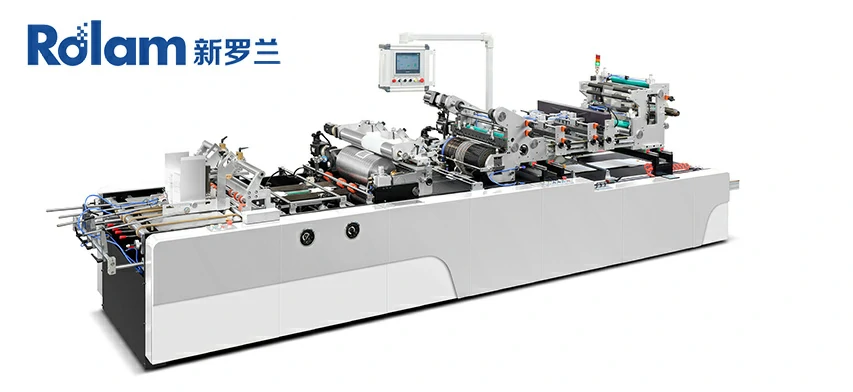
You're running a packaging production line—tissue boxes, cosmetic cartons, gift boxes, or liquor packaging. The windows need to be clean, the film needs to be straight, and the glue needs to hold. Traditional mechanical machines get the job done, but the rejects add up, setup time eats into shifts, and complex designs—V-cuts, creasing, special-shaped windows—are simply out of reach. A window patching machine with full-servo technology addresses all of these limitations. The XY-90/1100-S uses 11 servo motors and a human-machine interface to monitor and correct deviation at every stage of production. This guide covers what a full-servo window patching machine delivers, how it compares to traditional mechanical systems, and what to look for when upgrading your post-press line.
Eleven Servo Motors, One Synchronized System – The Engineering Behind Consistent Output
Traditional mechanical window patching machines rely on cams, gears, and linkages. Over time, wear creates play in the system. Registration drifts. Film alignment shifts. Operators compensate with manual adjustments, but the precision is never quite what it was when the machine was new. The XY-90/1100-S takes a fundamentally different approach. Eleven servo motors drive each part of the production process independently—paper feeding, film feeding, gluing, and delivery all run in sync without the bottlenecks that mechanical systems create. The servo and photoelectric sensors work together to maintain alignment. The result: consistent quality from the first box to the last.
The Servo Advantage Over Mechanical Drives
Mechanical systems use a single motor with a complex network of gears and linkages. One adjustment affects everything. Servo systems, by contrast, allow each station to be controlled independently. This means precise positioning at every stage—paper feeding, film cutting, glue application, and delivery—without the cumulative tolerance drift that plagues mechanical machines.
Human-Machine Interface for Real-Time Monitoring
The human-machine interface provides real-time feedback on every stage of production. Operators can monitor deviation, adjust parameters, and maintain quality control without stopping the line.
4,000 to 13,000 Pieces Per Hour – Speed That Adapts to Your Production Demand
The XY-90/1100-S achieves 4,000-13,000 pieces per hour for normal pasting, and 4,000-12,000 pieces per hour for corner cutting and creasing. Traditional mechanical machines typically run at 4,000-8,000 pieces per hour. At the top end, that's more than 60% higher output than a traditional machine. Over a 24-hour production cycle, that difference translates into thousands of additional boxes—or the ability to run the same volume in fewer shifts, freeing up labor and reducing overtime costs.
Speed That Doesn't Compromise Quality
Higher speed is meaningless if quality suffers. The servo-driven system maintains consistent speed and positioning across the entire production cycle, ensuring that quality remains stable even at maximum output.
Adjustable Speed for Different Job Types
The touch-screen interface allows operators to adjust speed quickly for different materials and job types. Film thickness ranges from 0.05-0.25mm with paper lengths from 140-800mm and paper widths from 40-450mm.
Automatic Deviation Correction – The Precision That Eliminates Waste and Rework
In packaging, waste is direct cost. Registration drift causes misaligned film, which means rejected boxes and rework. The XY-90/1100-S uses automatic deviation correction to maintain alignment across paper feeding, film positioning, and gluing. The servo and photoelectric sensors work together to detect and correct deviation in real time. The result: consistent quality from the first box to the last.
Reduced Rejects, Lower Material Waste
Reduced rejects mean less waste. A full-servo machine with precision point-to-point positioning and automatic deviation correction delivers consistency that mechanical systems can't match, especially on long runs where mechanical drift becomes noticeable.
Double-Sheet/Empty Sheet Protection
The machine features a double-sheet/empty sheet automatic glue lifting function, preventing glue waste and contamination when paper feed issues occur.
Beyond Rectangular Windows – V-Cuts, Creasing, and Special Shapes in One Pass
Older window patching machines do one thing: patch a rectangular window onto a flat box. If your customer wants a V-cut, a crease line, or a special-shaped window, you're either turning down the job or sending it to another converter. The XY-90/1100-S is designed for multi-function use: normal pasting, V-cut, and creasing line products. It can handle horizontal film corner cutting and creasing lines, punch holes in the film, and support some special-shaped window customization.
V-Cut and Creasing In-Line
The ability to handle V-cuts and creasing in-line eliminates a separate finishing step. What used to be two operations—patching then creasing—becomes one. That's not just a production gain; it's a competitive advantage.
Special-Shaped Window Customization
The machine supports special-shaped window customization, allowing you to say "yes" to more jobs without adding new equipment.
Touch-Screen Setup – From Hours of Mechanical Adjustment to Minutes of Configuration
The hidden cost of traditional machines is setup time. Every job change means mechanical adjustments that take time and skill—a process that takes hours. The XY-90/1100-S uses a man-machine interface where paper length and speed are entered directly on the touch screen. The paper feeding part adopts servo photoelectric control, so you don't need to adjust paper length by hand. The pin paper-feeding part uses servo control that can be operated directly on the touch screen, allowing you to change the angle and adjust connection speed between paper and pin for different papers.
Quick Changeovers, More Production Time
Shorter setup time means more production time. A machine that can change over in minutes instead of hours keeps your line running and your operators productive.
Less Reliance on Highly Skilled Operators
Traditional machines require a skilled operator who knows the machine intimately. The touch-screen interface reduces the skill level required for setup, allowing you to train operators faster and reduce reliance on a few key individuals.
Key Technical Specifications
| Specification | XY-90/1100-S Value | Why It Matters |
|---|---|---|
| Servo motors | 11 sets | Independent control of each production stage |
| Speed (normal pasting) | 4,000-13,000 pcs/h | Production throughput |
| Speed (corner cutting) | 4,000-12,000 pcs/h | Speed with optional functions |
| Paper length | 140-800mm | Box size flexibility |
| Paper width | 40-450mm | Box size flexibility |
| Film thickness | 0.05-0.25mm | Material range |
| Deviation correction | Automatic | Consistent quality, reduced waste |
| V-Cut capability | Yes | Multi-function production |
| Creasing in-line | Yes (optional) | Eliminates separate finishing step |
| Setup method | Touch-screen | Minutes instead of hours |
When Should You Upgrade to a Full-Servo Patching System?
What is the production speed of a full-servo window patching machine?
The XY-90/1100-S achieves 4,000-13,000 pieces per hour for normal pasting and 4,000-12,000 pieces per hour for corner cutting and creasing. Traditional machines typically run at 4,000-8,000 pieces per hour.
How does a full-servo machine improve precision?
The 11-servo system and photoelectric sensors monitor and correct deviation at each part of the production process, maintaining alignment across paper feeding, film positioning, and gluing. This eliminates the mechanical drift that occurs in gear-and-cam systems.
Can a full-servo machine handle V-cuts and creasing?
Yes. The XY-90/1100-S is designed for normal pasting, V-cut, and creasing line products. It can handle horizontal film corner cutting and creasing lines (optional), punch holes in the film (optional), and support special-shaped window customization (optional).
How long does it take to change over between jobs?
Setup on the XY-90/1100-S takes minutes via touch-screen interface, compared to hours on traditional mechanical machines. Paper length and speed are entered directly on the screen.
What is the typical return on investment?
For a converter running 2-3 shifts with frequent job changes, the combination of higher speed, reduced setup time, and lower waste can pay back the investment in 12-18 months. The ability to handle V-cuts and creasing in-line also eliminates secondary operations, adding to the savings.
Let's Match a Window Patching System to Your Box Types and Production Targets
Selecting a window patching machine comes down to three factors: production speed (match your volume), versatility (match your design complexity), and setup flexibility (match your job diversity). Contact Gaoke Machinery for a customized quote → —their team can help you select the right XY-90/1100-S configuration for your specific window patching needs.
Gaoke Machinery is a manufacturer of post-press processing equipment for the packaging industry. The XY-90/1100-S Full Servo Window Patching Machine features 11 servo motors with a human-machine interface for real-time monitoring and deviation correction, production speeds of 4,000-13,000 pieces per hour, automatic deviation correction, V-cut and creasing capabilities (optional), touch-screen setup, and support for paper lengths of 140-800mm, paper widths of 40-450mm, and film thickness of 0.05-0.25mm. Applications include tissue boxes, cosmetic boxes, gift boxes, liquor packaging, napkin boxes, and corrugated cartons. Connect with Gaoke Machinery to discuss your box types, production volume targets, and material specifications.