 English
 Español
 Français
 Português
Can a Folding Gluing Machine Handle 5-Ply Board?
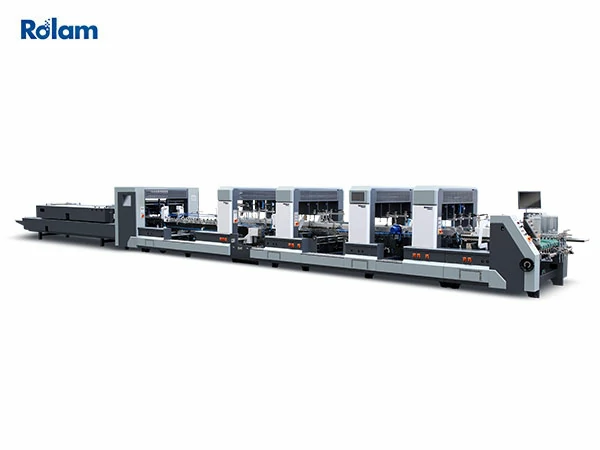
Yes—when the machine is built around servo-driven sections rather than a single main motor driving everything through a chain. A Folding Gluing Machine in the QH heavy-duty series handles 210–800gsm cardboard and A/B/E flute, including 3-ply and 5-ply corrugated board, because each section has its own servo motor and linear guide adjustment. That independent control is what keeps the fold square when the board is thick, dense, and unforgiving. This article explains how the servo architecture works, what the secondary creasing unit contributes to corrugated quality, and what to verify when you're matching a heavy-duty folder-gluer to corrugated carton production.
Why Does 5-Ply Board Need Independent Servo Sections?
One Motor, One Weak Link
A conventional folder-gluer uses a single main motor and a line shaft to drive the feeder, the folding belts, and the compression section. When that motor drives a thin carton board, the load is light and the chain stays taut. When the same motor drives 5-ply corrugated board through a folding section, the load spikes. The belts slip, the folds skew, and the glue line drifts off center.
The QH series replaces that architecture with independent servo motors on each section and linear guide adjustment. The feeder, the pre-folding section, the crash-lock bottom, the folding and closing belts, and the compression section each have their own drive. A load spike at the folding section doesn't pull down the feeder speed, and a belt that needs to run slightly faster on one side can be adjusted without affecting the other side.
Linear Guides Instead of Sliding Ways
The adjustment mechanism matters as much as the drive. Traditional machines use sliding ways that wear and develop play over time, and that play shows up as inconsistent folding. The QH series uses linear guide adjustment on the sections, which maintains the section alignment without the wear and backlash of a sliding way. When the operator changes a setting, the section moves to the new position and stays there.
How Does Secondary Creasing Fix Corrugated Fold Defects?
The Fish-Tail Problem
Corrugated board doesn't always crease cleanly. The die-cutting and creasing process can leave the crease line uneven, especially on recycled or heavy-grade board. When the board folds, the misaligned crease causes the flaps to diverge—a defect known as a fish tail.
The QH series includes a separate secondary creasing unit. That unit re-presses the crease line before the final fold, correcting the indentation that the die-cutting process left behind. The secondary creasing aligns the fish tail, so the folded box sits square instead of skewing at the corner.
Where the Secondary Creasing Sits
The secondary creasing unit is a separate station, not an attachment to the folding section. That separation matters because the crease correction has to happen before the board enters the folding belts. If the crease is corrected after the fold begins, the board has already taken a set and the correction has no effect.
| Parameter | QH-1700 | QH-2100 | QH-2500 |
|---|---|---|---|
| Blank width | 1700mm | 2100mm | 2500mm |
| Paper material | 210–800gsm, A/B/E Flute | Same | Same |
| Max. speed | 280 m/min | 280 m/min | 280 m/min |
| Max. folded thickness | 12mm | 12mm | 12mm |
| Fold sequence | 1st & 3rd: 180°/135°; 2nd & 4th: 180° | Same | Same |
| Frame | Stainless steel | Same | Same |
| Drive | Servo per section, linear guides | Same | Same |
| Total power | 60kW | 60kW | 60kW |
| Net weight | 14.5T | 15.5T | 18T |
What Does the Stainless Steel Frame Contribute?
A folder-gluer running at 280 m/min with 5-ply board generates vibration that a lighter frame cannot absorb. The QH series uses a strong stainless steel frame to hold the sections in alignment under that load. The frame doesn't just support the weight—it damps the vibration that would otherwise show up as inconsistent folding.
The stainless steel construction also resists the moisture and adhesive residue that accumulate around the glue station and the compression section. A painted frame would corrode at the seams and require repainting; the stainless surface wipes clean and stays dimensionally stable.
Where Does a Heavy-Duty Folder-Gluer Fit in Corrugated Packaging?
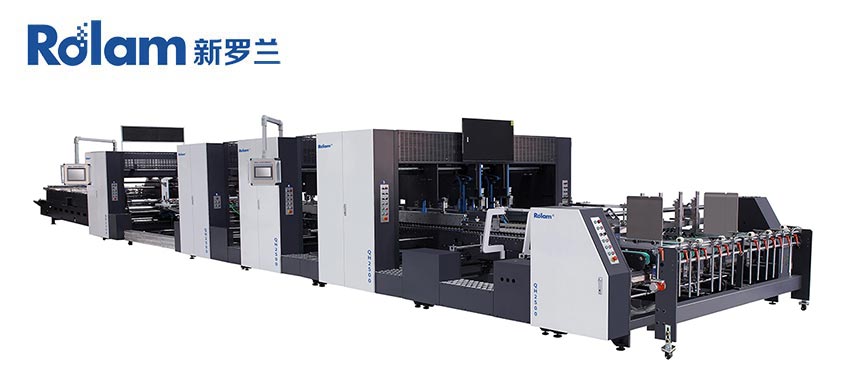
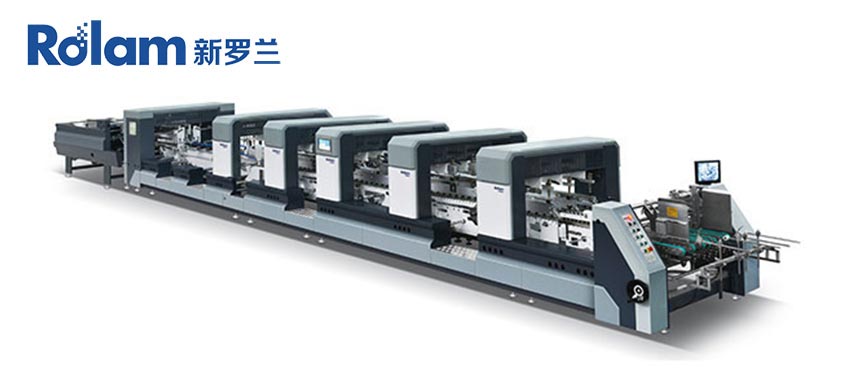
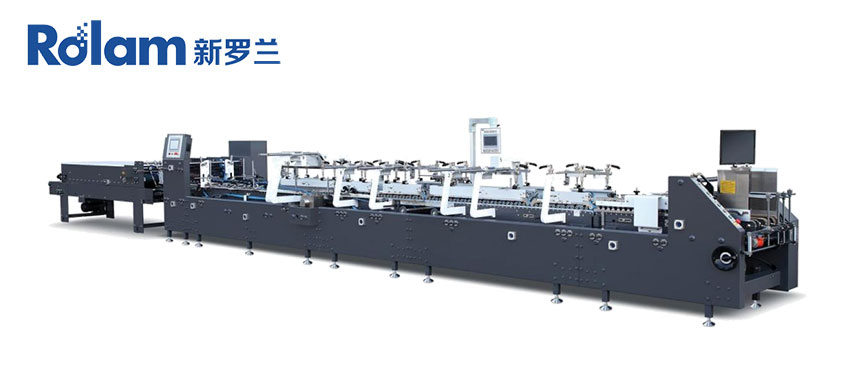
A Folding Gluing Machine in the QH configuration is used for 4-corner, 6-corner, crash-lock bottom, and straight-line cartons in corrugated board. That covers the heavy-duty shipping and display cartons used in electronics, appliance, and industrial packaging—the products where 5-ply board is the norm and a skewed fold is a structural failure, not just a cosmetic defect.
The QH Series from Gaoke Machinery is built around the servo-per-section architecture, the linear guide adjustment, and the secondary creasing unit. The machine handles 1700mm, 2100mm, and 2500mm blank widths, with a maximum speed of 280 m/min and a maximum folded thickness of 12mm. The PLC touch screen controls the start/stop, parameter settings, and fault diagnosis, and the wireless remote control lets the operator jog the machine during setup without standing at the main panel.
What Should You Check Before Selecting a Heavy-Duty Folder-Gluer?
How do I match the blank width to my cartons?
The QH series covers 1700mm, 2100mm, and 2500mm blank widths. Match the width to your largest flat blank plus the glue flap and register margin. A 5-ply carton with a large display panel can easily exceed the width of a standard folding carton, so measure the flat blank, not the assembled box.
What paper grade and flute combination does the machine accept?
The machine handles 210–800gsm cardboard and A/B/E flute. Confirm that your board grade falls within that range. Heavier 5-ply board may require a slower running speed to maintain fold accuracy, even though the machine is rated for 280 m/min. Test the actual board on the machine before committing to a production speed.
What does the servo system change about maintenance?
The servo motors and linear guides eliminate the chain tensioning and sliding-way wear that a conventional line requires. The maintenance focus shifts to the belts, the glue system, and the servo encoder feedback. Check the belt tension with the thumb test—10–15mm deflection at the center of the belt span. A belt that's too loose slips and skews the fold; a belt that's too tight strains the motor and wears the bearings.
What does the fault diagnosis system actually detect?
The automatic fault diagnosis alarm monitors the machine's operating parameters and triggers an alarm when a condition falls outside the expected range. It's a diagnostic aid, not a predictive maintenance system. The operator still needs to inspect the belts, the glue lines, and the crease quality during scheduled maintenance.
Straight Answers on Heavy-Duty Folder-Gluers
What's the difference between a standard and a heavy-duty folder-gluer?
A standard folder-gluer is built for folding carton board in the 200–600gsm range, with a single main motor and sliding-way adjustment. A heavy-duty machine is built for corrugated board up to 800gsm and A/B/E flute, with servo-per-section drives, linear guides, and a reinforced frame that absorbs the vibration of thick board at speed.
Why does the fold sequence use 180° and 135° angles?
The first and third folds run at 180° and 135°, and the second and fourth folds run at 180°. The 135° pre-fold on the third line conditions the crease before the final 180° fold. On thick corrugated board, a direct 180° fold would crack the liner; the intermediate 135° angle lets the board bend without fracturing the medium.
Can the machine run crash-lock bottom cartons?
Yes. The QH series handles crash-lock bottom cartons in addition to 4/6-corner and straight-line formats. The crash-lock bottom section uses a servo motor and an adjustable hook device to ensure the bottom-locking action is accurate. The secondary creasing function on the front bottom fold corrects the corrugated indentation and improves the lock reliability.
What causes the fold to skew on 5-ply board?
Skew on thick board usually comes from uneven belt speed on the left and right sides, or from a feeder that's entering the board at an angle. The QH series addresses the first cause with independent servo motors on each belt, and the second with a push structure that holds the cardboard against the baffles during feeding. If skew persists, check the baffle parallelism and the belt tension before adjusting the fold plates.
Let’s Match a Heavy-Duty Folder-Gluer to Your Corrugated Line
Share Your Board Grade, Blank Width, and Carton Style
A Folding Gluing Machine in the heavy-duty class should match your corrugated grade, flat blank width, and carton style—not the other way around. The QH Series Heavy Duty Folder Gluer from Gaoke Machinery runs servo-driven sections with linear guide adjustment at up to 280 m/min, handles 210–800gsm cardboard and A/B/E flute including 5-ply board, and produces 4/6-corner, crash-lock bottom, and straight-line cartons across 1700mm, 2100mm, and 2500mm blank widths. The secondary creasing unit corrects fish-tail defects before folding, and the PLC touch screen with wireless remote simplifies setup and fault diagnosis. If you’re specifying a folder-gluer for heavy corrugated cartons, send us your board grade, blank width, and carton style — we’ll help you confirm the right model and configuration before you order.