 English
 Español
 Français
 Português
How Does a Flute Laminating Machine Stack Laminated Sheets?
You're running a corrugated packaging line, and the printed top sheet has to be laminated to the corrugated board with precision — no misalignment, no bubbles, no glue squeeze-out. Then the laminated sheets need to be collected and stacked in a way that keeps them flat and ready for the next operation. A Flute Laminating Machine handles both steps: it laminates the printed sheet to the corrugated board and stacks the finished sheets automatically. This article explains how the lamination and flip-flop stacking sequence works, what keeps the top sheet aligned with the bottom board, and what to verify when you're specifying one for your packaging production.
How Does the Lamination Process Bond Printed Sheets to Corrugated Board?
Feeding, Gluing, and Pressing
The lamination sequence starts with two separate feeding stations. The bottom paper feeding section delivers the corrugated board into the machine, while the top sheet feeding mechanism delivers the printed sheet. The bottom feeder uses an imported servo motor electric controlling system with a Japan NITTA suction belt, and the suction power is inverter-controlled to match the board weight and surface. A water roller cleans the belt as it runs.
The glue roller applies adhesive to the corrugated board. The roller is stainless steel, so it doesn't rust, and the surface is precision-ground to ensure the minimum amount of glue is coated evenly. The down roller is cleaned by a water roller. After gluing, the printed sheet and the corrugated board are pressed together through the conveyor, and the laminated sheets move to the stacking section.
Servo Compensation and Positioning Accuracy
Fitting precision is ±1mm on both the YB-1450HS and YB-1650HS. That precision comes from the positioning system, which uses groups of photoelectric sensors to detect the bottom paper's forward relative position. The system then controls the top paper's position through servo motors on both sides, with independent compensation action. The top sheet and bottom board are laminated with precision because the servo system corrects for any drift in the top sheet's position before the two layers meet.
The servo compensation is automatic and continuous. As the machine runs, the sensors monitor the bottom paper's position and the servo motors adjust the top paper to match. If the top sheet drifts slightly to one side, the servo corrects it before the lamination nip. That closed-loop control is what keeps the fit within ±1mm across a full production run.
What Does the Flip-Flop Stacking System Do?
Front and Back Side Stacking
After the sheets are laminated, they move to the flip-flop system. The system stacks the laminated sheets based on the set amount in the front and back side automatically. This isn't a simple stacker that collects everything in one pile — it alternates the stacking position to create a stable, balanced pile.
The flip-flop action distributes the sheets evenly across the stack, which prevents the pile from leaning or collapsing. A stack that leans can cause handling problems downstream, and in extreme cases, the sheets can slide and damage the printed surface. The automatic front-and-back stacking keeps the pile square and stable.
Automatic Collection and Output
The entire line achieves high automation of the lamination process. The laminated sheets are stacked, slapped automatically, and the finished stacks come out automatically. That end-to-end automation means the operator doesn't have to manually collect sheets from the conveyor or move stacks by hand. The pre-stack section allows a pile of paper to be staged under non-stop conditions, which improves efficiency by reducing the time the machine spends waiting for a new pile.
| Parameter | YB-1450HS | YB-1650HS |
|---|---|---|
| Max sheet size | 1450×1450mm | 1650×1450mm |
| Top sheet thickness | 150-500g | 150-500g |
| Bottom sheet thickness | A/C/C/E/F corrugated, four-ply corrugated | A/C/C/E/F corrugated, four-ply corrugated |
| Fitting precision | ±1mm | ±1mm |
| Air consumption | 1.2m³/min | 1.2m³/min |
| Machine power | 30kW | 32kW |
| Measurement | 23.6×2.7×3M | 23.6×2.9×3M |
What Feeding Mechanisms Handle Different Paper Weights?
Bottom Paper Feeding with Suction Belt
The bottom paper feeding section uses an imported servo motor electric controlling system, with a Japan NITTA suction belt to make suction power inverter. The suction belt holds the corrugated board against the belt surface as it moves into the machine, which prevents the board from slipping or shifting during feeding. The suction power is adjustable through the inverter, so you can match the holding force to the board's weight and surface condition.
The belt is cleaned by a water roller. Corrugated board leaves dust and paper particles on the belt as it passes, and those particles can reduce suction efficiency over time. The water roller removes the buildup and keeps the suction consistent. The patented technology in this section ensures corrugated and cardboard goes out smoothly and simple operation.
Top Sheet Feeding for Thick and Thin Paper
The top sheet feeding mechanism is equipped with a high-speed auto dedicated feeder. Both the paper lifting and feeding nozzle can freely adjust angle to the paper. That adjustability is what allows the feeder to handle both thick and thin paper. A nozzle angle that works for a heavy printed sheet would cause a light sheet to flutter or mis-feed. By adjusting the angle, the operator can match the feed characteristics to the paper weight.
The top sheet is delivered rapidly and smoothly because the feeder is designed for high-speed operation. The servo motors on both sides of the top paper control its position, and the independent compensation action keeps it aligned with the bottom board. The top sheet and bottom paper are laminated with precision because the feeder delivers the sheet to the lamination point at the right moment and in the right position.
What Electrical and Transmission Systems Keep the Line Running?
PLC Control and Human-Machine Interface
The electrical system is designed in accordance with European CE requirements, which ensures machine stability, high efficiency, and low failure. The control system uses a man-machine interface combined with PLC. All the information — warnings, error detection, failures, operating speed — displays on the screen at a glance. That visibility means the operator can see what's happening with the machine without opening panels or checking individual gauges.
The CE-compliant electrical system is built with components that meet European safety and performance standards. For converters exporting to European markets or running equipment in facilities with CE compliance requirements, that design compliance simplifies the approval process.
Double-Toothed Synchronous Belt Drive
The transmission part uses an imported double-toothed synchronous belt drive, equipped with a tensioning device. The double-toothed design engages teeth on both sides of the belt, which distributes the load across more contact points and reduces wear. The tensioning device keeps the belt at the correct tension as it runs, which ensures the accuracy of the transmission, stable operation, and low noise.
A synchronous belt drive doesn't slip like a friction belt, and it doesn't require the lubrication that a chain drive needs. For a machine that runs continuously at high speed, those characteristics translate to consistent timing and reduced maintenance. The tensioning device means the operator doesn't have to manually adjust the belt tension as it wears — the tensioner takes up the slack automatically.
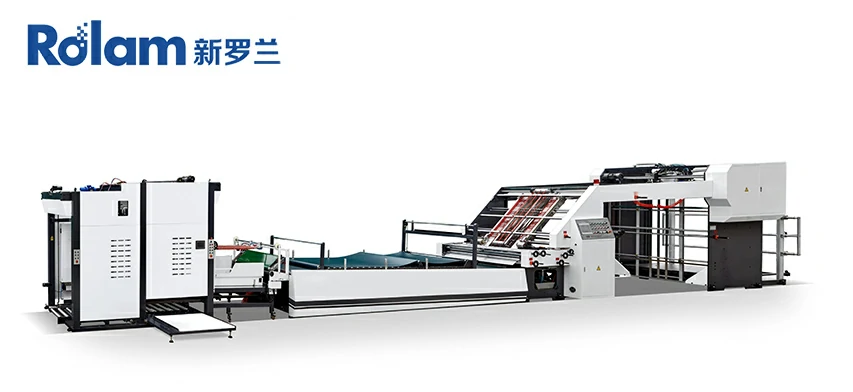
A Flute Laminating Machine like the YB-1450HS/1650HS from Gaoke combines the servo positioning system, suction belt feeding, and flip-flop stacking into one integrated line. The machine is built for the high-automation lamination of printed sheets to corrugated board.
Where Does High-Speed Lamination Fit in Corrugated Packaging?
Color Boxes, Display Packaging, and Heavy-Duty Cartons
Flute laminating is used wherever a printed sheet needs to be bonded to corrugated board to create a packaging product with both visual appeal and structural strength. That covers a range of applications:
-
Color boxes and gift boxes — printed top sheets laminated to E-flute or F-flute board for premium retail packaging
-
Display packaging — point-of-sale displays and shelf-ready packaging that need printed graphics on a rigid board
-
Heavy-duty cartons — printed sheets laminated to A, C, or four-ply corrugated board for transport packaging
-
Food packaging — printed cartons for food service that need the barrier properties of the corrugated board plus the printed surface
-
Electronics packaging — boxes for consumer electronics that combine printed graphics with protective corrugated structure
The bottom sheet thickness range covers A/C/C/E/F corrugated and four-ply corrugated paper, which means the machine handles everything from thin E-flute to heavy four-ply board. The top sheet range of 150-500g covers the printed paper stocks used in these applications.
Why Flip-Flop Stacking Matters for Downstream Operations
The flip-flop stacking system delivers a stable, square pile. For downstream operations like die-cutting, folder-gluing, or printing, a stable pile means consistent feeding. A pile that's leaning or uneven causes mis-feeds and jams. The automatic front-and-back stacking eliminates that problem by building a balanced pile from the start.
The pre-stack section allows non-stop operation. While one pile is being processed, the operator can stage the next pile on the pre-stack frame. When the current pile runs out, the machine switches to the staged pile without stopping. That continuous operation is what keeps the line running at production speed.
What Should You Check Before Selecting a Laminating Line?
How do I choose between the YB-1450HS and YB-1650HS?
The difference between the two models is the maximum sheet size. The YB-1450HS handles sheets up to 1450×1450mm, while the YB-1650HS handles up to 1650×1450mm. Choose the model that covers your largest sheet without running at the extreme edge of the range. The machine power is 30kW for the YB-1450HS and 32kW for the YB-1650HS, and the measurements differ slightly — 23.6×2.7×3M versus 23.6×2.9×3M. Check your floor space and electrical capacity against both specifications.
What maintenance does the glue roller need?
The stainless steel glue roller needs regular cleaning to prevent dried adhesive from affecting the coating uniformity. The down roller is cleaned by a water roller during operation, but the glue roller itself should be cleaned after each shift. Check the roller surface for wear or damage — a scored or pitted roller will apply uneven glue. The precision grinding on the roller surface is what ensures the minimum amount of glue is coated evenly, so protecting that surface matters.
How does the suction belt stay clean?
The bottom paper feeding section uses a water roller to clean the suction belt. As the corrugated board passes over the belt, it leaves dust and paper particles behind. The water roller removes those particles, keeping the belt surface clean and the suction consistent. Check the water roller for wear and replace it if the surface becomes glazed or the cleaning action diminishes.
What electrical safety features does the machine have?
The electrical system is designed in accordance with European CE requirements, which covers safety and performance standards. The PLC and human-machine interface display warnings, error detection, and failures on the screen. If the machine detects a fault, the operator sees the error message and can take corrective action before the fault causes damage. The CE compliance means the machine meets the electrical safety standards required for European installations.
What Do Packaging Managers Ask About Laminating Lines?
Can the machine run different corrugated board types?
Yes. The bottom sheet thickness range covers A, C, C, E, and F corrugated paper as well as four-ply corrugated paper. Switching between board types involves adjusting the feeding parameters and the glue application settings. The machine's servo positioning system automatically compensates for the board thickness to maintain the ±1mm fitting precision across different materials.
What's the difference between a standalone laminator and an integrated line?
A standalone laminator performs the lamination step and delivers laminated sheets to a separate stacking station. An integrated line like the YB-1450HS/1650HS combines the feeding, gluing, pressing, and flip-flop stacking into one continuous flow. The integrated approach reduces handling between operations, saves floor space, and shortens the production cycle from printed sheet and corrugated board to finished laminated stack.
How do I set the fitting precision?
The fitting precision is controlled by the positioning system, which uses photoelectric sensors and servo motors. The operator sets the target position on the human-machine interface, and the system maintains it through continuous compensation. If you see the fit drifting off-center, check the photoelectric sensors for dust or obstruction and verify that the suction belt is delivering the bottom paper at a consistent position.
What pre-stack capacity does the machine have?
The pre-stack section holds a pile of paper that's staged for the next production run. The specific capacity depends on the paper weight and thickness, but the pre-stack frame is designed for non-stop operation. While the machine processes the current pile, the operator stages the next pile on the pre-stack frame. The special design of the pre-stack paper frame saves time and effort during pile changes.
Let's Match a Laminating Line to Your Packaging Production
Share Your Sheet Size and Board Type
A Flute Laminating Machine should match your maximum sheet size, corrugated board type, and production volume — not the other way around. The High Speed Laminating Machine And Flip Flop Machine YB-1450HS/1650HS from Gaoke handles top sheets from 150-500g and bottom sheets in A/C/C/E/F corrugated and four-ply corrugated paper, with sheet sizes up to 1450×1450mm or 1650×1450mm depending on the model. The servo positioning system holds ±1mm fitting precision, the Japan NITTA suction belt with water roller cleaning keeps the bottom paper feeding stable, and the flip-flop stacking system collects laminated sheets in balanced piles for downstream processing. If you're specifying a laminating line for color boxes, display packaging, or heavy-duty cartons, send us your sheet size and board type — we'll help you confirm the right model and configuration before you order.