 English
 Español
 Français
 Português
Why Does a Window Patching Machine Glue Only the Window Area?
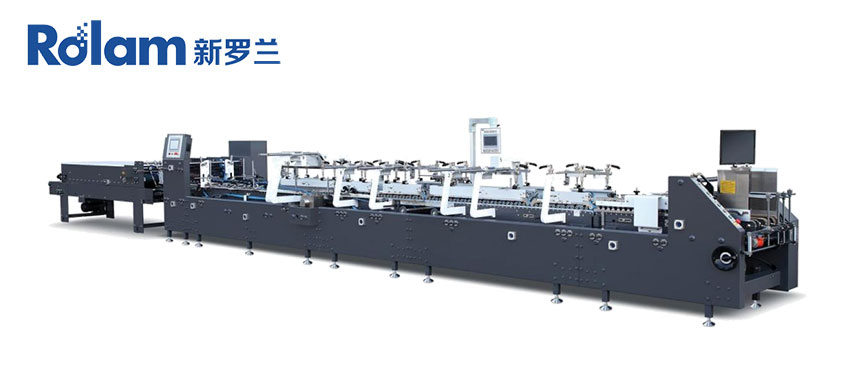
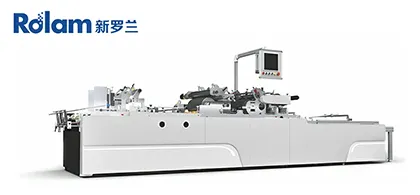
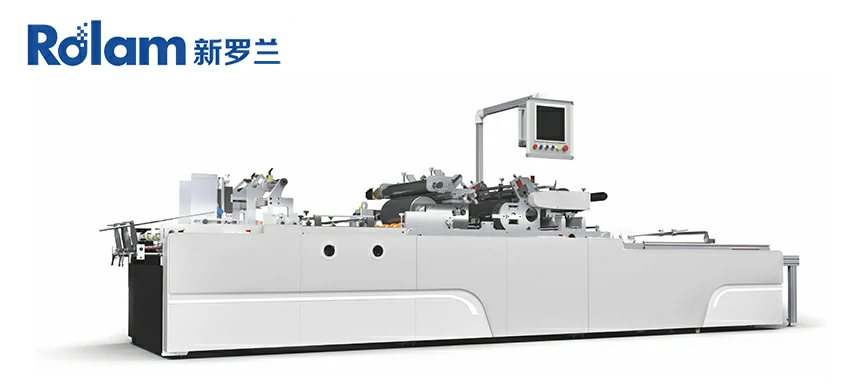
A Window Patching Machine applies glue to the carton blank, presses the film onto the glued area, and cuts the film to the window shape. Where the glue goes decides how much adhesive the job consumes and how much cleaning the roller needs at the end of the shift. The TC-700B/1080B uses a pneumatic gluing system that applies adhesive only where the window sits. You'll see how that works, what the film feed and cutting systems contribute, and where the two model envelopes sit.
What Questions Come Up Before Choosing a Gluing Method?
What does pneumatic spot gluing change?
The page describes the gluing section as using a pneumatic principle, gluing a particular part according to the window position, so there's no need to glue the whole roller. That's the difference: a full-width glue roller applies adhesive across the entire roller face, and the blank picks up glue wherever it contacts the roller. A spot gluing system applies adhesive only at the window perimeter. The page notes two results—the roller is easier to clean and the glue consumption is lower.
Why does the film cutter rotate?
The page lists the film cutter as equipped with an axis of rotation, to suit variable window positions. A fixed cutter only cuts the film at one position relative to the web; a rotating cutter can be angled to match a window that sits at a different position on the blank. That rotation is what reduces the machine-adjustment time when the window position changes from job to job.
The Paper and Film Feeding Systems
The paper feeder is PLC-controlled with a human-machine interface. The page notes that the length of paper to be fed can be entered on the touch screen, so paper can be input quickly and accurately, and that the feeder applies to both card paper and corrugated paper.
The film feeder uses a servo control system from a well-known international brand, with the film cut length entered on the touch screen. The page notes that this allows accurate film cutting and faster, more direct adjustment. The two feeders are separate systems—paper and film are each set independently.
| Parameter | TC-700B | TC-1080B |
|---|---|---|
| Speed (flat film patching) | 7,000–21,000 pcs/h | 6,000–10,000 pcs/h |
| Speed (V-cut and creasing) | 5,000–10,000 pcs/h | 4,000–7,000 pcs/h |
| Paper length | 140–600mm | 200–700mm |
| Paper width | 140–690mm | 200–1080mm |
| Film thickness | 0.03–0.25mm | 0.03–0.25mm |
| Film length | 60–400mm | 70–400mm |
| Film width | 30–400mm | 30–500mm |
| Main power | 2.2kW | 2.2kW |
| Pump power | 1.5kW | 1.5kW |
| Dimensions | 4200×1400×1500mm | 5500×1900×1600mm |
| Weight | 2,800kg | 3,500kg |
Why the film thickness range is 0.03–0.25mm
The film range covers thin window films through heavier protective films. A 0.03mm film needs a lighter cutting force and a precise servo feed; a 0.25mm film needs more cutting force and a different creasing pressure. The page lists film thickness as the same range on both models, so the difference between the TC-700B and TC-1080B is the paper envelope and the speed, not the film capability.
The Guide Rails and the Accuracy
The page lists the paper and film feeding sections as equipped with a chain guide imported from Germany and a linear guide imported from Taiwan, plus other accessories, described as improving film patching accuracy and reducing noise.
Those guide components are the mechanical reference the paper and film positions are held against. A chain guide that wears or a linear guide that develops play allows the paper or film to shift slightly between cycles, and the patch position drifts. The imported guides are specified to hold their position over a production run, which is what keeps the film aligned with the glued window area.
-
Paper feed guide: German chain guide
-
Film feed guide: Taiwanese linear guide
-
Paper feed control: PLC with touch screen length entry
-
Film feed control: servo with touch screen length entry
-
Glue application: pneumatic spot gluing at the window
-
Film cutting: rotating cutter for variable window positions
Why the noise reduction matters on a patching line
The page links the imported guides to reduced noise as well as improved accuracy. A guide with excess clearance rattles as the chain or the carriage moves through it, and that rattle is both a noise source and a sign of play. The tighter tolerances in the imported guides address both—the position stays accurate and the running is quieter.
The Two Models and the Format Envelope
The TC-700B handles paper from 140–600mm length and 140–690mm width, at 7,000–21,000 pieces per hour for flat film patching and 5,000–10,000 pieces per hour for V-cut and creasing. The TC-1080B extends the envelope to 200–700mm length and 200–1080mm width, at 6,000–10,000 pieces per hour for flat patching and 4,000–7,000 pieces per hour for V-cut.
The speed difference between the two models follows the size. The TC-1080B handles wider paper, and the larger format means fewer pieces per hour at the top of the range. The TC-700B, with its narrower envelope, reaches the higher speed on flat patching.
-
TC-700B: 140–690mm width, 7,000–21,000 pcs/h flat patching
-
TC-1080B: 200–1080mm width, 6,000–10,000 pcs/h flat patching
-
V-cut and creasing: both models, at lower speed than flat patching
-
Film: 0.03–0.25mm, 60–400mm or 70–400mm length
-
Power: 2.2kW main, 1.5kW pump on both models
What the V-cut and creasing function covers
The page lists the machine as widely used in 90-degree angle window samples, and notes that it can do the angle cutting and creasing. That's a separate function from the flat film patching—a V-cut window has an angled edge rather than a flat film panel, and the creasing adds a fold line. The speed drops when this function is active because the machine is performing more operations per piece.
The Output and the Adjustment Time
The page notes that compared with the previous machine, each section of this product has improved, saving adjustment time and making it more efficient and friendly to use.
That's the cumulative effect of the individual changes: the touch-screen paper and film length entry, the rotating film cutter for variable window positions, and the pneumatic spot gluing that avoids full-roller cleaning. Each one removes a manual adjustment step, and together they shorten the time between jobs.
Where the TC-700B/1080B Fits a Carton Converter's Line
The Window Patching Machine TC-700B/1080B from Gaoke is built around the pneumatic spot gluing the page describes: glue applied only at the window position, a servo film feeder with touch-screen length entry, a rotating film cutter for variable window positions, and imported German and Taiwanese guides for the paper and film paths. The TC-700B covers 140–690mm width at 7,000–21,000 pcs/h, and the TC-1080B extends to 200–1080mm width at 6,000–10,000 pcs/h, both handling film from 0.03–0.25mm and both capable of V-cut and creasing. For a carton converter running window boxes, the value sits in the spot gluing—the adhesive goes where the window is, the roller needs less cleaning, and the glue consumption drops.
What to confirm before matching a carton to the TC series
Confirm the paper size against the 140–690mm (TC-700B) or 200–1080mm (TC-1080B) envelope, the film thickness against 0.03–0.25mm, and the window size against the film length and width ranges. Check whether the job needs flat patching or V-cut and creasing, since the speed differs between the two. The page's parameters give the starting point; the actual carton design determines which model and which function configuration fit.
Let's Match a Window Carton to the TC Series
Send over your paper size, film thickness, window dimensions, and whether V-cut is needed—we'll help you check them against the 140–690mm or 200–1080mm paper envelope, the 0.03–0.25mm film range, and the speed figures for each function. Talk to Gaoke about your Window Patching Machine requirements and get a format-level answer before you commit to the tooling.