 English
 Español
 Français
 Português
Can a Window Patching Machine Handle Both Flat and V-Cut Windows?
You've seen window boxes everywhere—toy packaging, cosmetic cartons, gift boxes, tissue boxes. That clear film window that lets consumers see the product inside is applied by a window patching machine. But not all windows are flat. Some boxes use 90-degree angle windows that require V-cut and creasing, and many machines can only handle one type. The Window Patching Machine TC-700B/1080B was engineered to handle both flat film patching and V-cut with creasing—giving converters the flexibility to take on a wider range of box styles without investing in a second machine. This article walks through what makes this dual-capability possible, how PLC and servo control improve accuracy and changeover speed, and why pneumatic gluing reduces waste in day-to-day production.
What Box Makers Want to Know First
Two Immediate Questions—Direct Answers
Q: What box materials can this machine process?
A: The TC-700B/1080B handles both card paper and corrugated paper. It's suitable for a wide range of windowed packaging, from lightweight cosmetic cartons to heavier corrugated boxes.
Q: What's the production speed for flat versus V-cut windows?
A: For flat film patching, the TC-700B runs at 7000-21000 pcs/h and the TC-1080B runs at 6000-10000 pcs/h. For V-cut and creasing, the TC-700B runs at 5000-10000 pcs/h and the TC-1080B runs at 4000-7000 pcs/h.
The Window Patching Process — From Blank to Finished Box
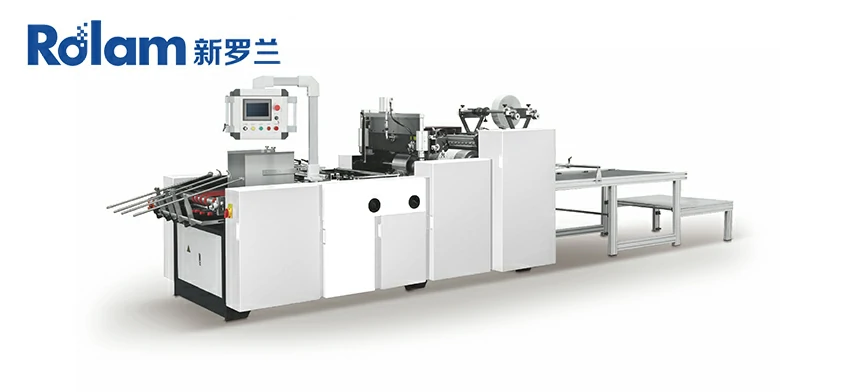
A window patching machine automates a sequence that would be tedious and inconsistent if done manually. Die-cut cartons are fed into the machine, adhesive is applied to the area around the window opening, film is cut to the required length, and the patch is transferred onto the carton blank under controlled pressure. The TC-700B/1080B handles each of these steps with dedicated systems. The paper feeder uses PLC with a human-computer interface, allowing the operator to enter paper length on a touch screen for fast, accurate input. The film feeder is controlled by a servo system from a well-known international brand, enabling precise film cutting with quick adjustments. The gluing section uses pneumatic principles to apply adhesive only to the areas that need it—not the whole roller.
Why Selective Gluing Saves More Than Glue
Traditional gluing systems apply adhesive across the entire roller, wasting glue on areas where it isn't needed and creating a mess that takes time to clean. The TC-700B/1080B's pneumatic gluing system applies glue selectively based on the window position. This reduces glue consumption, simplifies roller cleaning, and keeps the production area cleaner. For converters running high volumes, the cumulative savings in glue and cleanup time are significant.
The Film Cutting Advantage
The film cutter is equipped with an axis of rotation, allowing it to suit variable window positions without time-consuming mechanical adjustments. When you switch from one box design to another, the cutter can be repositioned quickly, saving setup time and improving productivity. This is particularly valuable for converters running multiple short-run jobs per shift.
Engineering Details That Improve Accuracy and Reduce Noise
The TC-700B/1080B incorporates several imported components that directly affect the quality of the finished box and the working environment on the production floor:
German Chain Guides and Taiwanese Linear Guides
The paper and film feeding sections use chain guides imported from Germany and linear guides imported from Taiwan. These components contribute to film patching accuracy by maintaining precise alignment throughout the feed cycle. They also reduce noise during operation—a benefit that improves the working environment for operators and reduces fatigue over long shifts.
Servo-Controlled Film Feed for Consistent Patch Length
The servo film feeding system allows the operator to input the required film length directly on the touch screen. The system cuts the film accurately to that length, run after run. Because the servo responds instantly to parameter changes, switching from one film length to another takes seconds—not the trial-and-error adjustments required on mechanical systems.
PLC Paper Feeding With Touch Screen Input
The paper feeder uses a PLC with a human-computer interface. The operator enters the paper length on the touch screen, and the feeder delivers paper at the correct length quickly and accurately. This eliminates the manual measurement and adjustment that slower machines require.
Specifications Across the TC Series
| Parameter | TC-700B | TC-1080B |
|---|---|---|
| Speed (Flat Film Patching) | 7000-21000 pcs/h | 6000-10000 pcs/h |
| Speed (V-Cut and Creasing) | 5000-10000 pcs/h | 4000-7000 pcs/h |
| Paper Length | 140-600mm | 200-700mm |
| Paper Width | 140-690mm | 200-1080mm |
| Film Thickness | 0.03-0.25mm | 0.03-0.25mm |
| Film Length | 60-400mm | 70-400mm |
| Film Width | 30-400mm | 30-500mm |
| Main Power | 2.2kw | 2.2kw |
| Power of Pump | 1.5kw | 1.5kw |
| External Dimension | 4200×1400×1500mm | 5500×1900×1600mm |
| Machine Weight | 2800kg | 3500kg |
Applications Where the TC Series Excels
The TC-700B/1080B is designed for windowed packaging across multiple consumer product categories:
90-Degree Angle Window Boxes
The TC-700B is widely used in 90-degree angle window samples. It performs angle cutting and creasing, allowing the film to follow the box's angled window opening—a capability that flat-window machines don't offer.
Toy Boxes and Children's Packaging
Toy boxes often use windows to show the product inside. The TC series handles the paper and film combinations typical of toy packaging, from thin card stock to heavier corrugated board.
Cosmetic and Gift Boxes
Cosmetic packaging and gift boxes demand clean film application with precise registration. The servo-controlled film cutting and pneumatic gluing deliver the consistency that these high-visibility applications require.
Tissue Boxes and Household Packaging
Tissue boxes and similar household packaging benefit from the TC series' speed and reliability. The machine's ability to handle both card paper and corrugated paper covers the range of materials used in these products.
Common Questions About Window Patching Machines
Q: What's the difference between the TC-700B and TC-1080B?
A: The primary differences are paper and film size capacity. The TC-1080B handles larger paper (up to 1080mm width, 700mm length) and larger film (up to 500mm width), making it suitable for bigger box formats. The TC-700B is more compact and runs at higher flat-film speeds (up to 21000 pcs/h).
Q: How does the machine handle different window positions?
A: The film cutter is equipped with an axis of rotation, so it can be repositioned to suit variable window positions without extensive mechanical changes. This saves machine-adjustment time between jobs.
Q: What film thicknesses can the machine apply?
A: Both models handle film thicknesses from 0.03mm to 0.25mm—covering the range of films typically used for carton windows.
Q: Does the machine require compressed air?
A: The gluing section uses pneumatic principles. The power of the pump is 1.5kw on both models.
Q: Can the machine handle corrugated board?
A: Yes. The paper feeder applies to both card paper and corrugated paper. The TC series handles the range of materials used in windowed packaging.
Request a Window Patching Machine Configuration
A window patching machine that handles both flat film and V-cut windows is the practical choice for converters who need flexibility across box styles without a second machine. The Window Patching Machine TC-700B/1080B delivers PLC paper feeding with touch screen input, servo film cutting with quick adjustment, pneumatic gluing that applies adhesive only where needed, rotating film cutter for variable window positions, German chain guides and Taiwanese linear guides for accuracy and noise reduction, flat film patching speeds up to 21000 pcs/h, V-cut and creasing speeds up to 10000 pcs/h, film thickness range of 0.03-0.25mm, and two model sizes to match different box formats.
Whether you're producing toy boxes, cosmetic cartons, gift boxes, or tissue packaging, this machine offers the precision and production flexibility that modern box makers demand. With its ability to handle both card paper and corrugated paper, it adapts to your specific product mix.
Contact Gaoke Machine for a window patching machine configuration assessment → their team can help you select the right model and options for your specific box sizes, film specifications, and production targets. Get a machine that handles flat and V-cut windows—so you can take on more box styles without adding equipment.